Live Shopping and Social Streams: The Entertainment-Commerce Boom
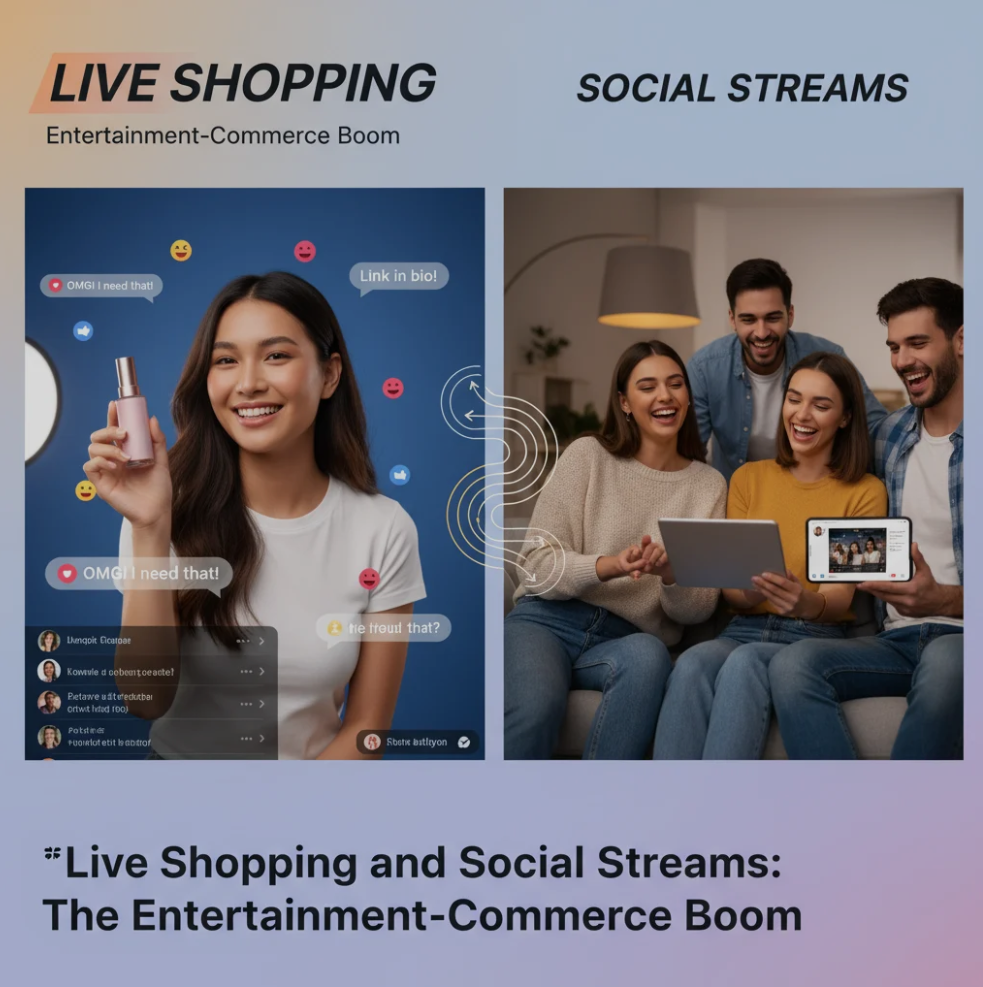
The way people shop online is changing fast. What began as simple clicks on e-commerce websites has evolved into interactive, real-time experiences. Today, millions of consumers are tuning into live shopping streams — events where entertainment meets retail — turning casual viewers into instant buyers.
Welcome to the world of live shopping and social commerce, where selling is no longer just about products, but about connection, excitement, and community.
From TV Shopping to TikTok Live
Live shopping isn’t a new idea. Decades ago, shopping channels like QVC or HSN showed how storytelling could sell products. But today’s version is faster, social, and global.
Platforms like TikTok, Instagram Live, and YouTube Shopping have transformed product demos into viral, shareable moments. Influencers showcase new items, interact with viewers, and offer exclusive discounts — all in real time.
“It’s the blend of authenticity and immediacy that makes live shopping so powerful,” says digital commerce strategist Elaine Wu.
Why Live Shopping Works
Live shopping bridges the gap between trust and impulse. Audiences watch someone they admire use a product, ask questions directly, and make purchases without leaving the stream.
This mix of entertainment and convenience boosts engagement and sales — sometimes 10x higher than traditional online campaigns.
Key reasons behind the boom:
- Real-time audience interaction
- Limited-time offers that drive urgency
- Authentic influencer recommendations
- Built-in entertainment and storytelling
The Social Commerce Ecosystem
Beyond live streams, social commerce extends across platforms. Instagram’s shoppable posts, Facebook Marketplace, and TikTok Shop allow users to browse, buy, and review all within the same app.
The result: a frictionless path from discovery to checkout — with social validation built in.
For brands, it means meeting customers where they already spend their time.
The Role of Influencers and Creators
Creators are at the heart of this boom. They bring credibility, personality, and entertainment value that traditional ads can’t replicate.
Micro-influencers, in particular, are proving to be highly effective — combining niche authority with strong community trust.
“The most successful live sellers aren’t just influencers — they’re storytellers and entertainers,” notes Wu.
Challenges and Growing Pains
Despite the hype, live shopping also faces hurdles:
- Maintaining authenticity while promoting sales
- Managing logistics for instant order surges
- Adapting formats across different cultures and markets
But as technology improves and platforms invest in features like integrated checkout and AR product demos, these challenges are quickly being addressed.
The Future of Live Shopping
Industry analysts predict that live shopping will account for over 20% of global e-commerce by 2026. As AI-powered personalization and 3D virtual experiences become mainstream, shopping online will feel more like attending a live show than browsing a catalog.
The line between social media and e-commerce is blurring — and shoppers love it.
Conclusion
The rise of live shopping and social commerce is more than just a retail trend; it’s a cultural shift. Consumers crave connection, entertainment, and authenticity — and brands that embrace this new era are seeing massive returns.
In the digital marketplace, the future belongs to those who can both entertain and engage.




Post Comment