The Psychology of Scarcity: Using FOMO Without Losing Trust
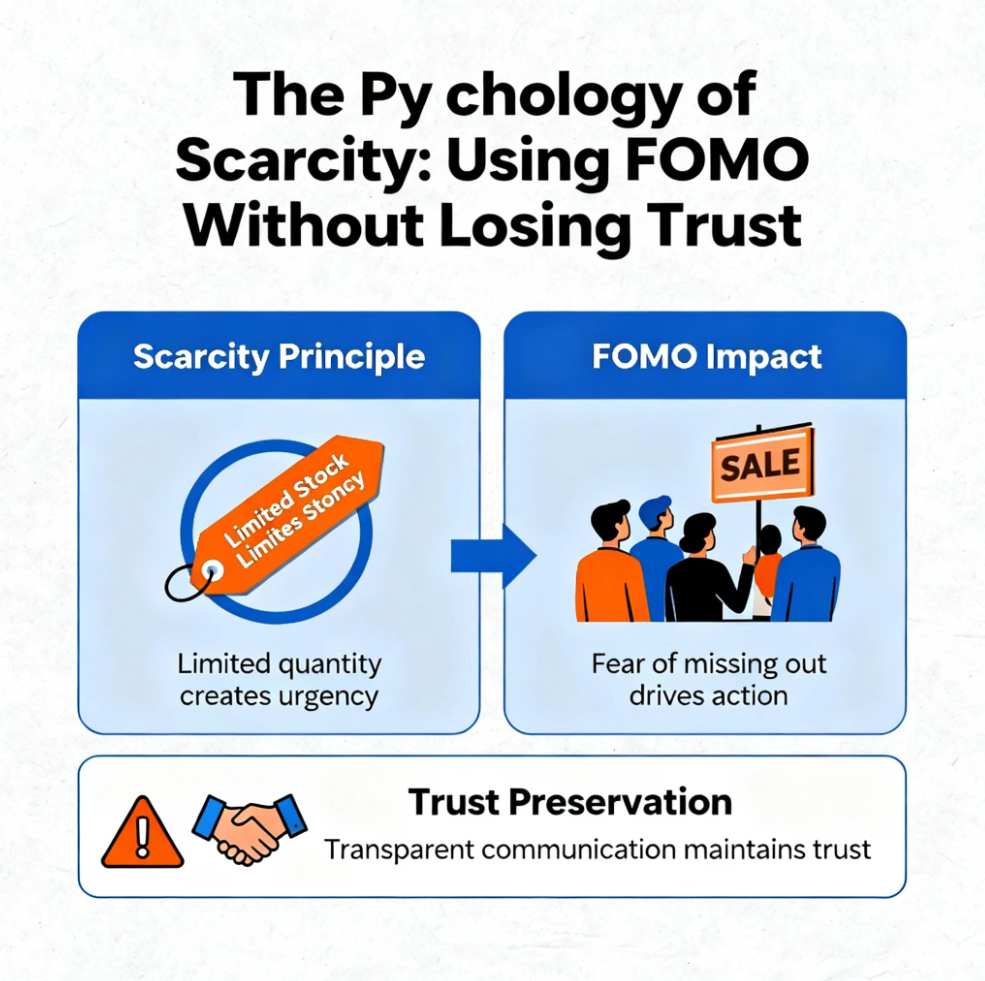
Scarcity is one of the most powerful psychological triggers in marketing. When something feels limited, our brains react instantly: act now or miss out forever.
This phenomenon—better known as FOMO (Fear of Missing Out)—drives clicks, conversions, and sales across industries.
But there’s a catch.
When scarcity is exaggerated, fake, or manipulative, it doesn’t just hurt conversions—it destroys trust, which is far harder to rebuild than urgency.
Understanding the psychology of scarcity is the key to using FOMO ethically, effectively, and sustainably.
What Is the Psychology of Scarcity?
The psychology of scarcity refers to how humans assign higher value to things that are limited, rare, or time-bound.
This bias is rooted in evolution:
- Scarce resources once meant survival
- Hesitation could lead to loss
- Acting fast increased chances of reward
Today, that instinct shows up in marketing messages like:
- “Only 3 spots left”
- “Offer expires tonight”
- “Limited edition”
When used correctly, scarcity reduces decision paralysis. When abused, it triggers skepticism.
Why FOMO Is So Effective
Scarcity works because it activates multiple psychological mechanisms:
1. Loss Aversion
People fear losing opportunities more than they enjoy gaining them. Missing out hurts.
2. Social Proof
If others want it, it must be valuable. Scarcity often implies popularity.
3. Decision Compression
Urgency removes the comfort of “I’ll think about it later.”
According to behavioral research highlighted by Harvard Business Review, scarcity increases perceived value even when the product itself remains unchanged.
👉 https://hbr.org
When Scarcity Turns Toxic
FOMO becomes dangerous when it crosses from motivation into manipulation.
Common trust-breaking tactics include:
- Fake countdown timers that reset
- “Only X left” messages that never change
- Artificial waitlists with no real limit
- Constant “last chance” emails that never end
Customers notice.
Once they do, every future message feels dishonest—even when it’s real.
How to Use FOMO Without Losing Trust
1. Make Scarcity Real (Not Cosmetic)
Ethical scarcity is based on actual constraints, such as:
- Limited inventory
- Capacity-based services
- Time-bound launches
- Seasonal availability
If it isn’t genuinely limited, don’t frame it as such.
Rule of thumb:
If you’d feel uncomfortable explaining it openly, don’t use it.
2. Be Transparent About the “Why”
Trust grows when people understand why something is limited.
Examples:
- “We cap enrollment to maintain coaching quality”
- “Production is limited due to sustainable sourcing”
- “Early pricing ends as we move to the next phase”
Transparency turns urgency into respect, not pressure.
3. Use Scarcity Sparingly
When everything is urgent, nothing is.
Effective brands:
- Reserve scarcity for key moments
- Avoid constant countdowns
- Let value—not panic—do the heavy lifting
Scarcity should highlight value, not replace it.
4. Pair FOMO With Reassurance
Urgency works best when combined with safety signals:
- Clear refund policies
- Honest testimonials
- Transparent FAQs
- No-pressure guarantees
This reduces anxiety while preserving momentum.
FOMO without reassurance feels like a trap.
FOMO with reassurance feels like confidence.
5. Respect Long-Term Relationships Over Short-Term Wins
Short-term urgency can boost conversions.
Long-term trust builds brands.
Ask before using scarcity:
- Will this still feel fair after purchase?
- Would I recommend this experience to a friend?
- Does this align with our brand values?
If the answer is no, rethink the tactic.
Brands That Get Scarcity Right
Ethical scarcity is often seen in:
- Education & cohort-based courses
- Membership communities
- High-touch services
- Product drops with transparent supply limits
Platforms like Shopify emphasize ethical marketing practices that prioritize trust and customer lifetime value.
👉 https://www.shopify.com
The Future of FOMO: From Pressure to Permission
Modern consumers are more informed—and more skeptical—than ever.
The future of scarcity marketing isn’t about:
- Loud urgency
- Artificial pressure
- Endless countdowns
It’s about:
- Honest constraints
- Clear value
- Mutual respect
When done right, scarcity doesn’t coerce—it invites.
Conclusion: Trust Is the Ultimate Conversion Multiplier
The psychology of scarcity explains why FOMO works.
Ethical marketing determines how long it works.
Used responsibly, scarcity:
- Helps customers decide
- Signals value
- Strengthens credibility
Used irresponsibly, it erodes trust faster than any bad product ever could.
In the long run, trust outperforms urgency—every time.


Post Comment