Global E-Commerce Insights: Navigating Regulations and Market Barriers
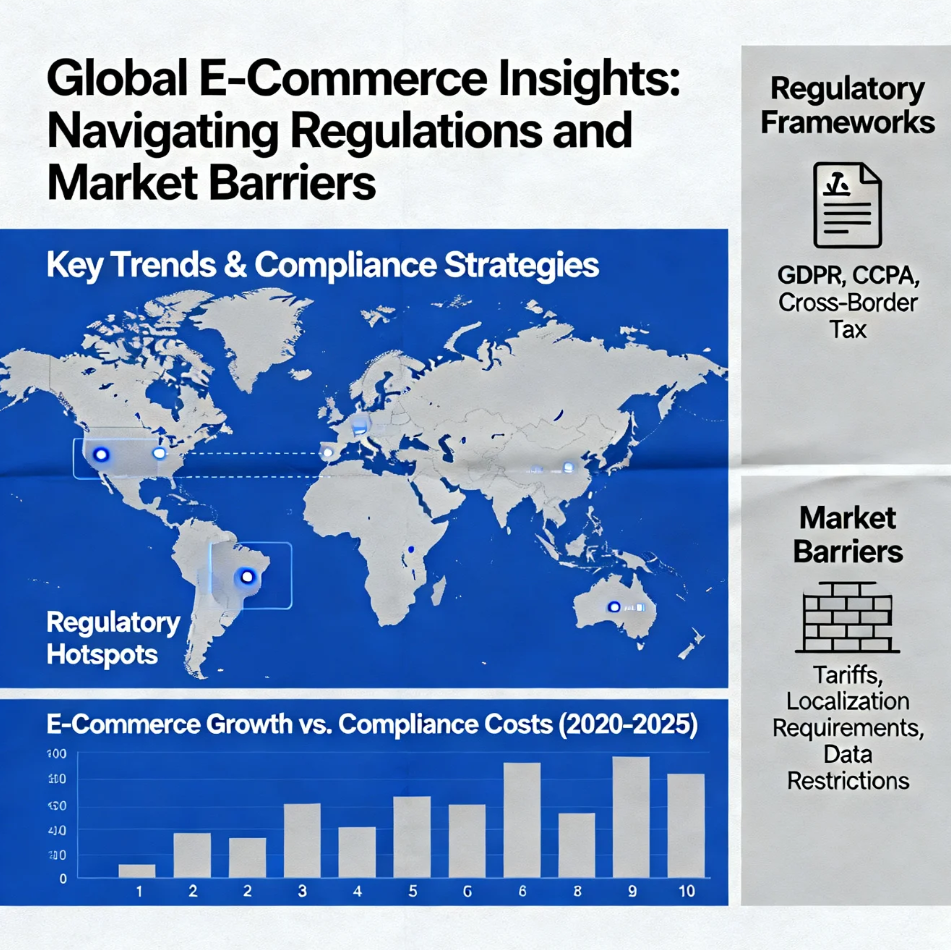
Global E-Commerce Insights: Navigating Regulations and Market Barriers
Understanding and navigating these barriers is no longer optional. It’s a core competency for any brand aiming to compete globally.
Why Regulations Matter in Global E-Commerce
Every country operates under its own legal, financial, and consumer protection frameworks. When businesses cross borders digitally, they must comply with multiple regulatory environments simultaneously.
Ignoring regulations can result in:
- Fines and legal penalties
- Platform bans or payment restrictions
- Loss of consumer trust
- Delayed or blocked market entry
Smart e-commerce growth begins with regulatory awareness.
Common Regulatory Challenges Across Markets
1. Data Protection and Privacy Laws
Data privacy is one of the most significant barriers in global e-commerce.
Key challenges include:
- GDPR compliance in the European Union
- Data localization requirements in some Asian markets
- Consent and cookie regulations
Businesses must manage customer data responsibly while maintaining seamless user experiences.
2. Taxation and Cross-Border VAT
Different countries apply different tax rules to online sales:
- Value-added tax (VAT) or goods and services tax (GST)
- Digital services taxes
- Import duties and customs fees
Without proper tax planning, pricing can become uncompetitive or legally non-compliant.
3. Payment and Currency Restrictions
Not all payment methods are universally accepted.
Barriers often include:
- Local payment preferences (e-wallets, bank transfers)
- Currency conversion regulations
- Anti-money laundering (AML) requirements
Successful global e-commerce platforms localize payment options to match regional expectations.
4. Product and Content Restrictions
Some products may be restricted or regulated differently across regions:
- Health and wellness products
- Digital content and media
- Gambling, gaming, or financial services
Compliance requires careful review of local laws before market entry.
Market Barriers Beyond Regulation
Not all barriers are legal. Many are structural or cultural.
These include:
- Language and localization challenges
- Consumer trust and brand recognition
- Logistics and fulfillment complexity
- Different expectations for customer support
Addressing these barriers is just as important as legal compliance.
Strategies for Navigating Global E-Commerce Barriers
Local Expertise Matters
Partnering with local consultants, legal advisors, or regional platforms helps businesses:
- Interpret regulations accurately
- Avoid costly compliance mistakes
- Adapt faster to market changes
Build Compliance Into Your Platform
Modern e-commerce systems increasingly embed:
- Automated tax calculation
- Region-specific checkout rules
- Data compliance tools
This reduces manual risk and improves scalability.
Prioritize Market Selection
Not every market is equally accessible.
Smart expansion focuses on:
- Regulatory clarity
- Digital infrastructure readiness
- Consumer demand alignment
Phased expansion often outperforms rapid global launches.
Turning Compliance Into Competitive Advantage
Brands that master regulations gain more than legal safety—they gain trust.
Consumers are more likely to buy from platforms that:
- Protect personal data
- Offer transparent pricing
- Follow local consumer rights laws
In global e-commerce, compliance signals credibility.
The Future of Global E-Commerce Regulation
Regulatory environments are evolving rapidly.
Trends shaping the future include:
- Stronger digital consumer protections
- Increased scrutiny of cross-border data flows
- Greater platform accountability
Businesses that treat regulation as a strategic factor—not a barrier—will be better positioned for long-term growth.
Final Thoughts: Global Growth Requires Local Understanding
Global e-commerce success isn’t just about reaching new customers—it’s about respecting the systems that govern them.
By understanding global e-commerce regulations and proactively addressing market barriers, businesses can expand confidently, sustainably, and responsibly.
In a connected world, growth belongs to those who navigate complexity with insight.











Post Comment