AI-Powered Shopping: How Artificial Intelligence Is Transforming E-Commerce
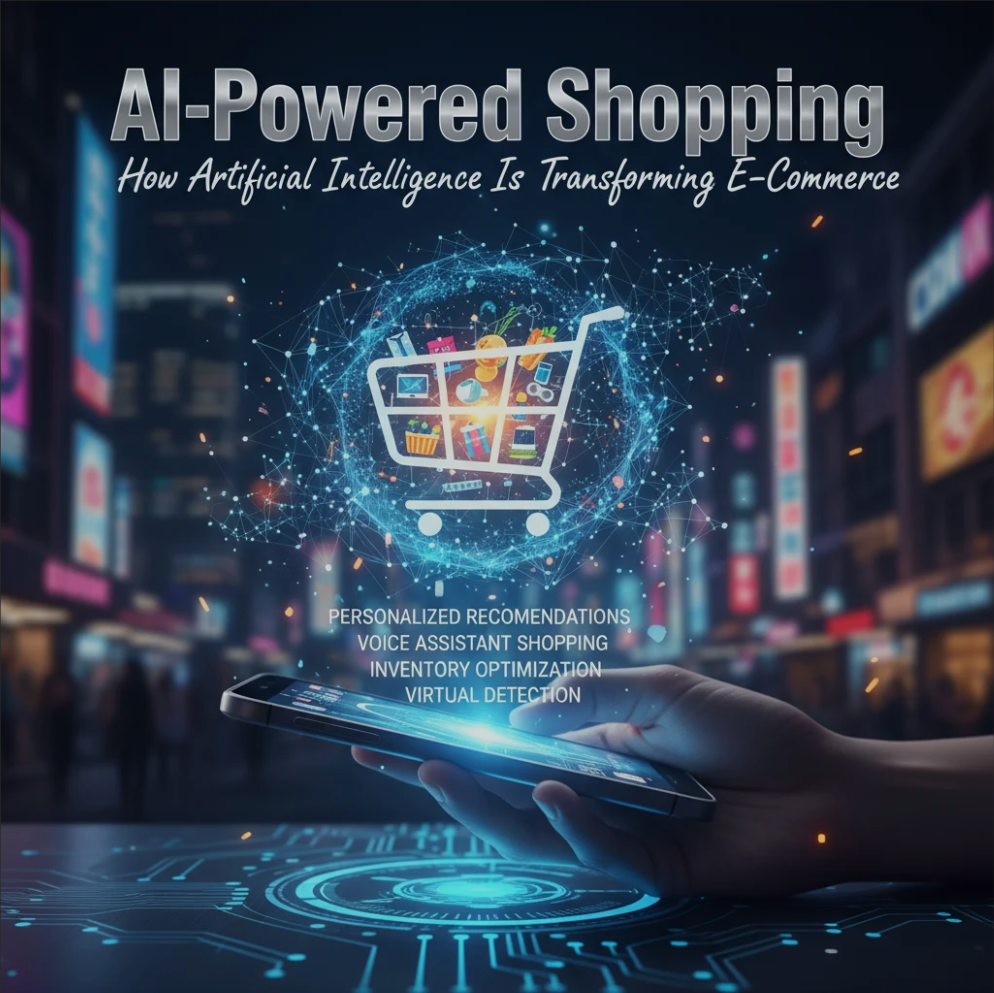
The world of online shopping is changing faster than ever — and at the center of this transformation is Artificial Intelligence (AI).
From personalized recommendations to automated customer support, AI is redefining how consumers interact with brands and how businesses understand their buyers
Here’s how AI is powering the next generation of e-commerce.
🤖 1. Personalized Shopping Experiences
Gone are the days of one-size-fits-all marketing.
AI analyzes your browsing history, preferences, and purchase behavior to deliver tailored product recommendations that feel personal.
Platforms like Amazon and Shopify use machine learning to predict what customers want — often before they even search for it.
This personalization not only increases sales but also builds stronger emotional connections between shoppers and brands.
💬 2. Smarter Customer Support with AI Chatbots
Customer service has evolved from long wait times to instant, 24/7 AI-powered chatbots.
Modern bots can handle complex queries, recommend products, and even assist with order tracking.
AI chat systems like ChatGPT integrations or Shopify Magic help brands save time and boost satisfaction, offering human-like responses that make the shopping journey seamless.
📦 3. Predictive Analytics for Inventory & Logistics
AI doesn’t just improve front-end shopping — it also powers the backend.
Retailers now use predictive analytics to anticipate demand, manage inventory, and optimize shipping routes.
By analyzing trends and purchase cycles, businesses can reduce waste, prevent stockouts, and ensure faster delivery — all while saving money.
🧠 4. Visual Search and Voice Commerce
Have you ever uploaded a photo to find similar products? That’s AI-driven visual search in action.
Apps like Pinterest Lens or Google Shopping use image recognition to match visual patterns to real products.
Meanwhile, voice assistants like Alexa or Google Assistant make it possible to shop hands-free — marking the rise of voice commerce.
💡 Fun fact: By 2026, over 40% of online purchases are expected to involve voice or visual AI assistance.
🔐 5. AI and Fraud Detection
E-commerce fraud is a growing concern, but AI offers smart protection.
Algorithms can instantly detect unusual activity, flag suspicious transactions, and protect both businesses and customers in real time.
This proactive approach keeps online marketplaces safer and more trustworthy — essential for brand reputation.
🚀 6. The Future: Fully Autonomous E-Commerce
The next evolution of AI in shopping includes autonomous stores, AI-driven pricing, and hyper-personalized digital assistants that handle entire purchases for you.
Imagine a future where your AI agent knows your style, budget, and timing — and automatically orders what you need before you even realize it.
🌟 Conclusion: A Smarter Way to Shop
AI has turned e-commerce into an ecosystem that’s faster, smarter, and more human-centered than ever before.
By blending data with creativity, artificial intelligence doesn’t just change how we shop — it transforms the very definition of convenience and personalization in the digital age.







Post Comment