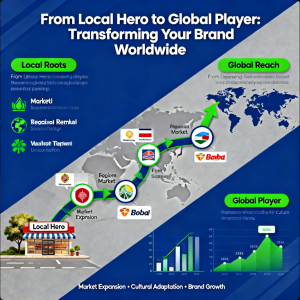
From Local Hero to Global Player: Transforming Your Brand Worldwide

Every globally recognized brand started somewhere — often as a local hero, trusted by a specific community, region, or niche. But making the leap from local success to international recognition requires far more than scaling operations. It demands strategic brand transformation, cultural intelligence, and a consistent yet adaptable identity.
In this guide, we explore how businesses can evolve from local hero to global player, building relevance, trust, and competitive strength across borders.
Why Local Success Isn’t Enough for Global Growth
Being strong locally doesn’t automatically translate to global success. International markets bring:
- Cultural differences
- New competitors
- Different consumer expectations
- Regulatory and communication challenges
Brands that expand without adapting risk becoming invisible or irrelevant abroad.
The goal isn’t to abandon your local identity — it’s to elevate it into a globally resonant brand story.
Step 1: Clarify Your Global Brand Core
Before expanding, define what must remain consistent everywhere.
Ask the right questions:
- What problem do we solve universally?
- What values define our brand?
- Why should global customers trust us?
Your brand purpose, mission, and tone of voice should stay intact, even as execution adapts locally.
💡 Tip: Global brands win by being consistent in meaning, flexible in expression.
Step 2: Adapt Without Diluting Your Identity
Global brands don’t copy-paste campaigns across markets. They localize intelligently.
Key adaptation areas:
- Language and messaging
- Visual symbols and colors
- Cultural norms and buying behavior
- Platforms and content formats
For example, humor, authority, or emotional storytelling can vary drastically between regions.
👉 Learn more about cultural branding from Harvard Business Review:
https://hbr.org/2019/01/how-global-brands-succeed-in-local-markets
Step 3: Build Global Trust Through Credibility
Trust is the currency of global branding.
To establish credibility worldwide:
- Showcase certifications and compliance
- Highlight global partnerships
- Use testimonials from international clients
- Maintain consistent brand experiences
A brand that feels professional, transparent, and reliable travels faster across borders.
Step 4: Invest in Digital-First Global Visibility
Your digital presence is often your first global impression.
Must-have elements:
- SEO-optimized multilingual websites
- Region-specific landing pages
- Localized social media strategies
- Strong global content marketing
According to McKinsey, brands with strong digital localization outperform competitors in international markets:
https://www.mckinsey.com/capabilities/growth-marketing-and-sales/our-insights
Step 5: Evolve From Brand Awareness to Brand Authority
Global players don’t just compete — they lead.
To position your brand as a global authority:
- Publish thought leadership content
- Speak at international events
- Collaborate with global influencers
- Share insights, not just promotions
Authority builds long-term brand equity, not just short-term visibility.
Common Mistakes to Avoid When Going Global
❌ Expanding too fast without research
❌ Ignoring cultural nuance
❌ Inconsistent brand identity
❌ Treating global branding as only a marketing task
Successful transformation requires alignment across leadership, marketing, operations, and customer experience.
From Local Hero to Global Player: The Mindset Shift
The real transformation isn’t just geographic — it’s strategic.
Local heroes win through proximity and familiarity.
Global players win through clarity, credibility, and cultural intelligence.
If your brand can communicate one powerful promise in many voices, you’re ready to play on the world stage.









Post Comment