How Data Analytics Can Turn Insights into Online Sales Growth
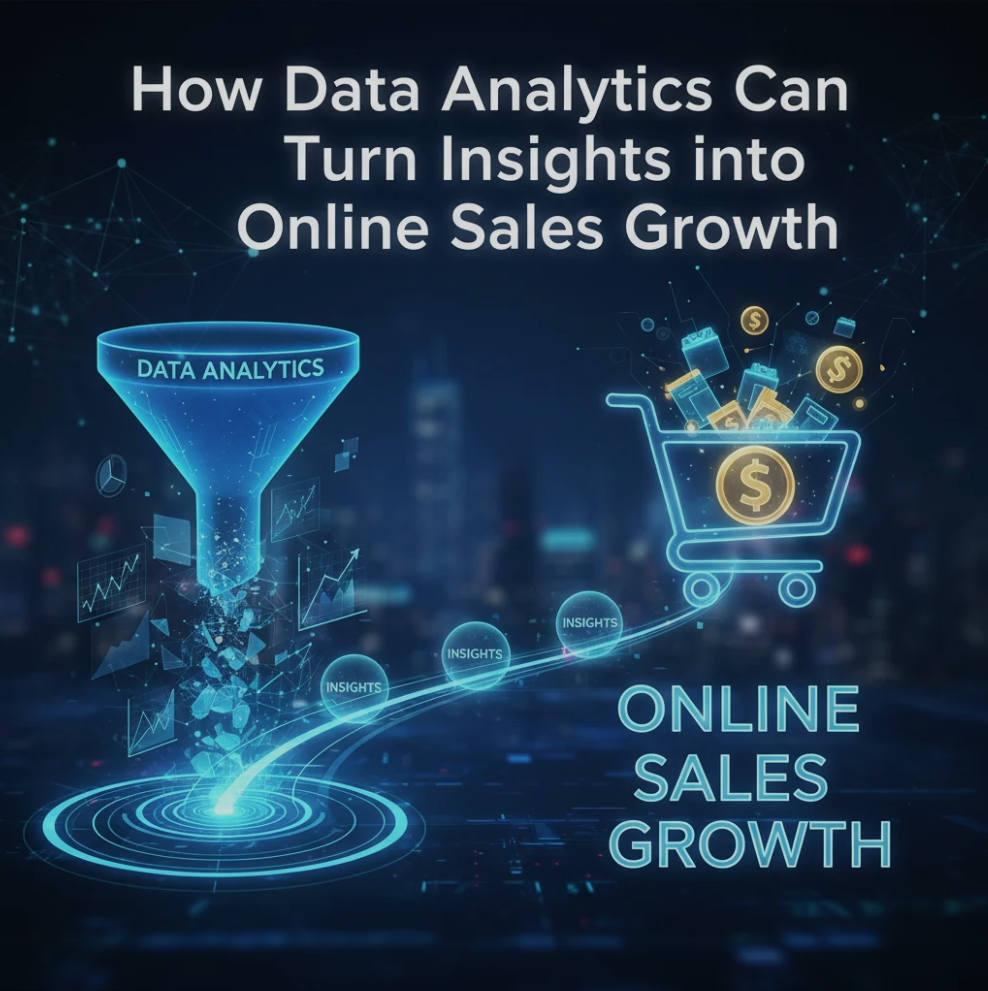
In today’s digital-first marketplace, success is no longer just about offering great products — it’s about understanding your customers, behaviors, and patterns through data. That’s where data analytics becomes a game-changer.
Businesses that harness analytics effectively can turn raw information into actionable strategies — boosting engagement, conversion rates, and ultimately, online sales growth.
1. Understanding Data Analytics in E-Commerce
Data analytics involves collecting and interpreting customer information — such as browsing history, purchase habits, and demographics — to make smarter business decisions.
In e-commerce, analytics helps answer crucial questions like:
- Which products convert best?
- What time of day do customers shop most?
- How do marketing campaigns affect traffic and sales?
With the right tools, every click becomes a clue to higher profits.
2. Turning Insights into Action
The power of analytics lies not just in gathering data, but in using it to take action. Here’s how companies apply insights effectively:
- Personalized Marketing: Data helps brands deliver product recommendations and email campaigns tailored to customer interests.
- Dynamic Pricing: Using analytics, retailers adjust prices based on demand, competition, and buying behavior.
- Optimized User Experience (UX): Heatmaps and A/B testing reveal which website elements convert visitors into buyers.
Data transforms decisions from “gut feeling” to “data-driven confidence.”
3. Boosting Customer Retention Through Predictive Analytics
Predictive analytics uses machine learning to forecast future customer behavior — such as repeat purchases or churn risks.
For example, if analytics shows that customers tend to reorder after 30 days, businesses can automatically send a personalized discount email at day 25.
This approach not only improves retention but also increases lifetime customer value (LCV).
4. Measuring What Matters: Key Metrics for Sales Growth
To truly drive online sales, businesses should focus on these core metrics:
- Conversion Rate (CR): The percentage of visitors who make a purchase.
- Average Order Value (AOV): How much customers spend per transaction.
- Customer Acquisition Cost (CAC): How much it costs to gain each new buyer.
- Customer Lifetime Value (CLV): The long-term profit from a single customer.
When these numbers improve, so does your bottom line.
5. The Role of AI and Automation
Modern data analytics is powered by artificial intelligence. AI-driven dashboards can automatically detect patterns and recommend strategies — such as identifying underperforming campaigns or suggesting cross-sell opportunities.
Automation ensures that businesses respond in real-time, capturing potential sales before they slip away.
Conclusion
The difference between growing slowly and scaling fast often comes down to one thing: data analytics.
By collecting insights, interpreting trends, and acting decisively, companies can create targeted, customer-focused strategies that translate directly into sales growth.
📈 Data doesn’t just inform decisions — it fuels transformation.








Post Comment