Inside the Mind of the Online Shopper: The Psychology of Digital Buying
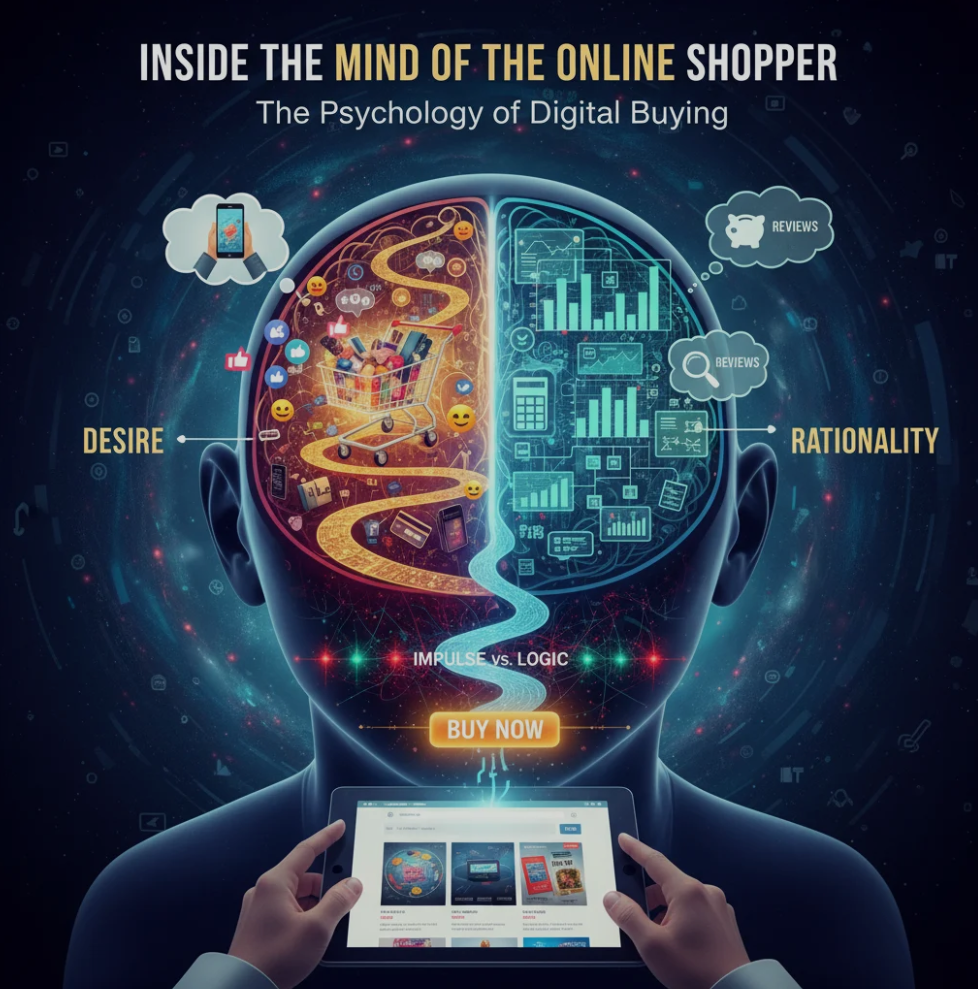
Every click, scroll, and purchase tells a story.
Behind every transaction lies the psychology of the online shopper — a mix of emotions, habits, and subtle cues that shape digital buying behavior.
In today’s hyper-connected world, brands that understand this psychology can predict what shoppers want before they even realize it themselves.
💬 1. The Power of Instant Gratification
Online shoppers crave convenience and speed.
From one-click checkouts to same-day delivery, instant gratification drives digital purchasing decisions.
People buy not just for the product, but for the feeling of getting what they want right now.
E-commerce platforms that simplify the path to purchase win more conversions — and loyalty.
🎨 2. Visual Triggers and Emotional Design
Design speaks louder than words.
Colors, imagery, and layout all play a crucial role in influencing online shopper psychology.
For example, red can evoke urgency, while blue creates trust.
High-quality visuals and intuitive interfaces reduce hesitation and make shoppers feel confident in their choices.
“A well-designed product page doesn’t just display an item — it tells a story that sells.”
💸 3. The Illusion of Choice and Control
Humans love having options — but not too many.
When faced with dozens of products, shoppers can experience decision fatigue.
Smart retailers use guided discovery, filters, and recommendations to make decision-making feel effortless.
The best e-commerce experiences balance freedom and focus — giving shoppers control without overwhelming them.
💬 4. Social Proof: The Modern Word of Mouth
Online reviews, testimonials, and influencer endorsements are powerful trust signals.
When shoppers see others enjoying a product, their confidence increases.
This social proof effect taps into the human need for belonging and validation.
Highlighting customer stories, ratings, and photos turns uncertainty into assurance.
🕹️ 5. Gamification and the Reward System
Badges, loyalty points, and limited-time offers trigger the brain’s reward centers.
The psychology of digital buying often mirrors gaming behavior — shoppers feel a rush when they “win” a deal or unlock a discount.
These emotional highs keep customers coming back, transforming simple transactions into engaging experiences.
🔐 6. Trust and Transparency: The Foundation of Conversion
In the online world, trust equals sales.
From secure payment icons to clear return policies, transparency reassures hesitant shoppers.
When brands communicate openly about pricing, shipping, and sustainability, it builds credibility — a crucial part of online shopper psychology.
Trust isn’t built in a click, but it can be lost in one.
🧭 7. Personalization and Predictive Shopping
Modern consumers expect brands to know them.
AI-driven recommendations, personalized emails, and dynamic landing pages make shopping feel personal and intuitive.
This level of customization connects emotionally with buyers — it says, “We see you, and we get you.”
Personalization turns browsing into bonding.
🧩 8. The Subconscious Pull of Scarcity and Urgency
Phrases like “Only 2 left in stock” or “Offer ends soon” tap into deep psychological triggers.
Scarcity creates value, and urgency accelerates decisions.
These cues make shoppers act fast — not because they’re forced to, but because they don’t want to miss out.
When used ethically, these tactics can boost engagement and conversions dramatically.
🏁 Conclusion: The Human Side of Digital Buying
At its core, online shopper psychology isn’t about algorithms — it’s about people.
Every purchase reflects emotion, trust, and desire.
Brands that master this human connection go beyond selling products — they create memorable experiences that resonate.
Understanding the mind of the online shopper is the first step toward creating loyal customers in the digital age.




Post Comment