Social Commerce 2.0: Turning Engagement into Sales
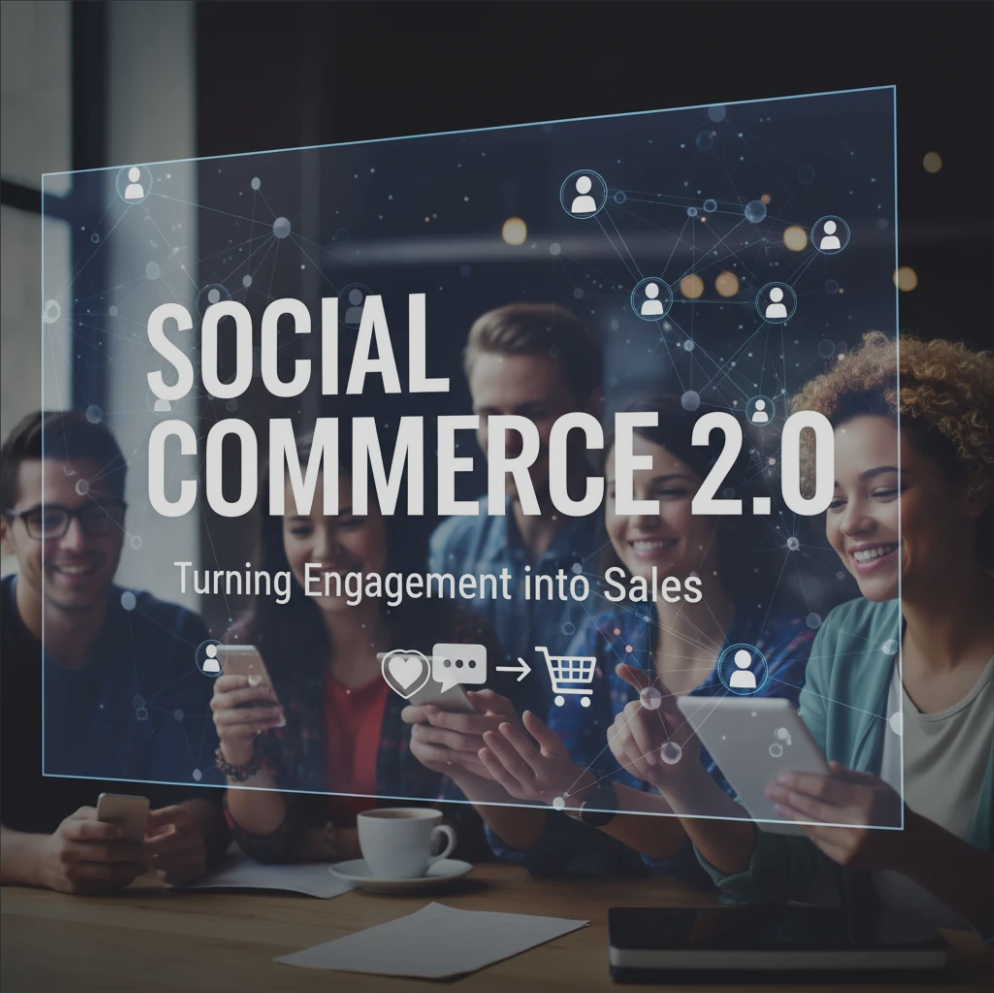
Social media is no longer just about connecting — it’s about converting engagement into sales. The next generation of online selling, known as Social Commerce 2.0, is transforming how brands interact with consumers, creating seamless shopping experiences within the apps people already love.
Let’s explore how this new wave of social commerce is redefining digital marketing and helping businesses grow revenue through engagement.
🛍️ 1. What Is Social Commerce 2.0?
Social Commerce 2.0 is the evolution of social media shopping — where discovery, engagement, and purchase all happen in one place.
Unlike traditional eCommerce, where users leave social platforms to buy, this new model integrates shopping directly into apps like:
- Instagram Shops
- TikTok Shop
- Facebook Marketplace
- Pinterest Shopping
The result? A faster, frictionless buying experience that turns casual scrolling into instant sales.
Image Alt Text: Customer purchasing a product directly through Instagram Shop on a smartphone.
🤳 2. The Power of Engagement
Engagement — likes, comments, and shares — is now the new currency in digital marketing.
Social Commerce 2.0 uses engagement data to:
- Personalize product recommendations
- Improve ad targeting
- Identify high-intent shoppers
- Encourage social proof through user-generated content (UGC)
Every interaction becomes a signal that helps brands refine their strategy and boost conversions.
💡 3. Influencers and Live Shopping: The Human Touch
Social Commerce 2.0 thrives on authentic connection.
- Influencer marketing builds trust and drives impulse purchases.
- Live-stream shopping lets hosts demo products, answer questions, and sell in real time.
- Micro-influencers are especially effective, offering relatable voices with highly engaged audiences.
This human-first approach bridges the gap between brand and buyer — creating experiences, not just transactions.
📊 4. Leveraging Data and AI
Smart brands use AI and analytics to turn engagement insights into sales strategies:
- Predictive algorithms identify buying patterns
- Dynamic ads retarget shoppers based on previous interactions
- AI chatbots guide customers through the buying process
By analyzing engagement data, businesses can personalize content and anticipate customer needs before they arise.
💼 5. Building a Seamless Omnichannel Experience
Social Commerce 2.0 isn’t just about selling on one platform — it’s about integration.
Successful brands create a consistent journey across:
- Social media shops
- Company websites
- Email and SMS campaigns
- In-store experiences
The goal is to make purchasing effortless, no matter where the customer starts.
🌟 6. Future Trends in Social Commerce
Looking ahead, Social Commerce 2.0 will continue to evolve with:
- AR try-ons that let customers visualize products before buying
- Voice-activated shopping through AI assistants
- Community-driven commerce powered by loyalty programs and creator-led stores
These innovations will push social platforms to become the ultimate digital marketplaces.
🚀 Conclusion: Turning Engagement into Sales
Social Commerce 2.0 represents a new era of selling — where storytelling, engagement, and technology unite to create meaningful shopping experiences.
Brands that embrace this shift can turn likes into loyalty, followers into customers, and engagement into sustainable sales growth.
The future of eCommerce isn’t coming — it’s already here, inside your favorite social app.





Post Comment